Juan de Fuca Corridor
Overview
"Enhancing cross-border wellbeing and safeguarding natural ecosystems through sustainable coastal tourism."
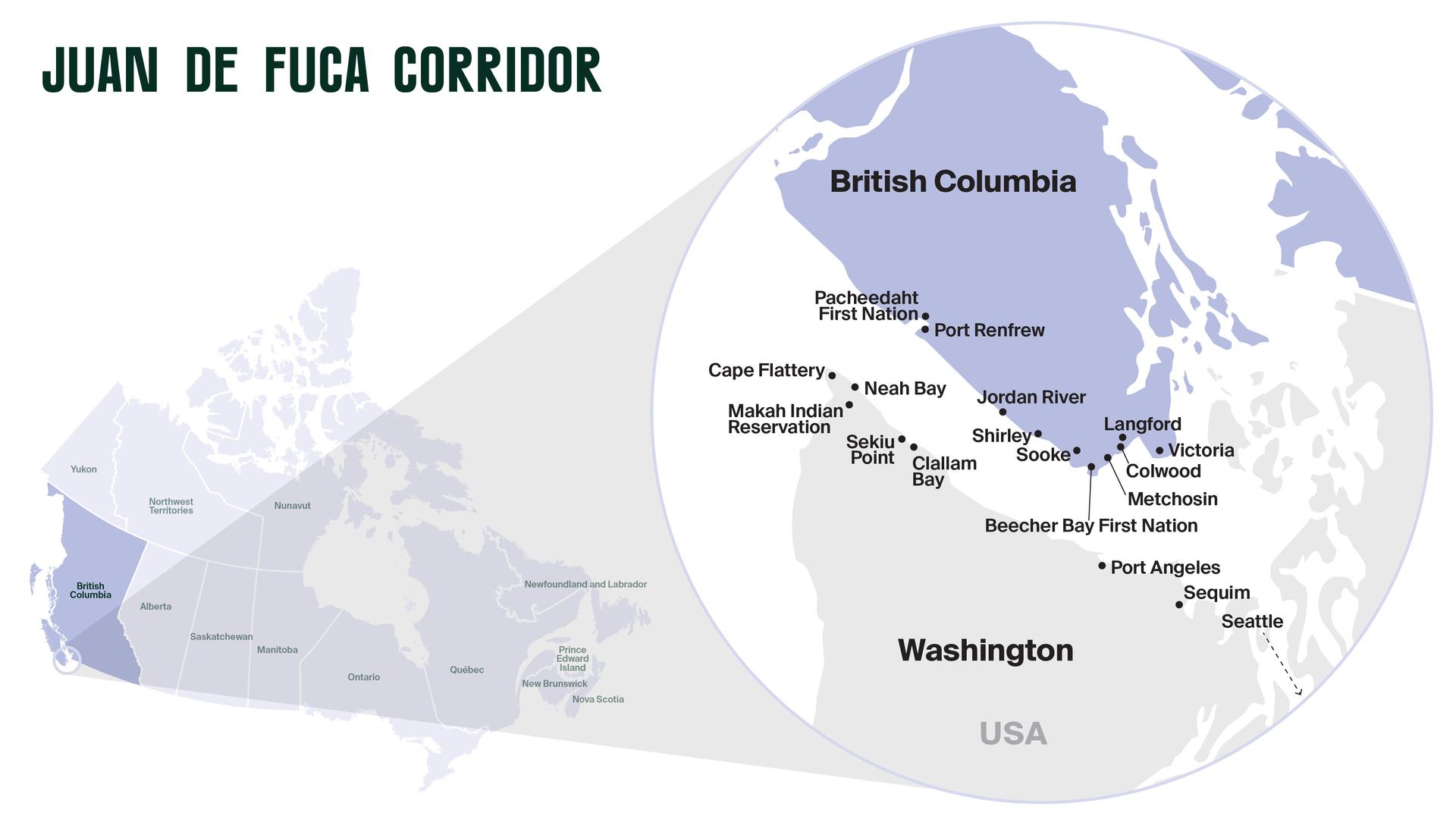
The Juan de Fuca Tourism Corridor is the first tourism initiative linking regions across an international border - Vancouver Island in British Columbia and Washington’s Olympic Peninsula in the U.S.
Overview
"Enhancing cross-border wellbeing and safeguarding natural ecosystems through sustainable coastal tourism."
The Juan de Fuca Tourism Corridor is the first tourism initiative linking regions across an international border - Vancouver Island in British Columbia and Washington’s Olympic Peninsula in the U.S.
The Corridor is a collection of coastal towns and Indigenous territories that make up an essential marine gateway that connects both sides of the Salish Sea.
With a projected visitor market exceeding eight million by 2029, the Corridor has the potential to boost year round tourism from rainforest hikes and wildlife viewing to Indigenous storytelling, farm-to-table dining, and immersive eco-cultural learning. It will help communities diversify their economies and protect what makes this place special.
Development of the Juan de Fuca Corridor relies on long-term partnerships and projects. The focus for 2026 and beyond will be on supporting implementation and investment.
The Corridor is a collection of coastal towns and Indigenous territories that make up an essential marine gateway that connects both sides of the Salish Sea.
With a projected visitor market exceeding eight million by 2029, the Corridor has the potential to boost year round tourism from rainforest hikes and wildlife viewing to Indigenous storytelling, farm-to-table dining, and immersive eco-cultural learning. It will help communities diversify their economies and protect what makes this place special.
Development of the Juan de Fuca Corridor relies on long-term partnerships and projects. The focus for 2026 and beyond will be on supporting implementation and investment.
Corridor approach
The Tourism Corridor Strategy Program (TCSP) helps communities, provinces and territories plan and grow resilient, inclusive and regenerative tourism economies from coast to coast to coast. In support of the Strategy, the goal for the Tourism Corridors is to bring people, places and industries together to strengthen local wellbeing and accelerate sustainable destination development.
Corridor approach
The Tourism Corridor Strategy Program (TCSP) helps communities, provinces and territories plan and grow resilient, inclusive and regenerative tourism economies from coast to coast to coast. In support of the Strategy, the goal for the Tourism Corridors is to bring people, places and industries together to strengthen local wellbeing and accelerate sustainable destination development.
Juan de Fuca corridor objectives
Guided by community leadership and local context, each Corridor defines objectives that reflect regional priorities while building on the shared goals of the Tourism Corridor Strategy Program.
Access and sustainable mobility: Improve multi-modal and low-emission travel options across a shared marine and coastal region.
Indigenous land and traditions: Ground the corridor in the territories, stories and leadership of Indigenous communities on both sides of the Strait.
Arts, culture and heritage: Animate cross-border cultural life through events, exhibitions, artist exchanges and heritage interpretation.
Eco and edu-tourism: Pair adventure experiences with education, stewardship and citizen science.
Story-led wayfinding: Use wayfinding to tell integrated stories of Indigenous lands, protected areas and coastal communities.
Key attractions and experiences
Participating partners
- District of Sooke
- Pacific Northwest Economic Region (PNWER)
- Indigenous communities and First Nations
- Local tourism associations and chambers of commerce
- Parks Canada and BC Parks
- Olympic Peninsula Visitors Bureau
- Washington State tourism organizations
Participating partners
- District of Sooke
- Pacific Northwest Economic Region (PNWER)
- Indigenous communities and First Nations
- Local tourism associations and chambers of commerce
- Parks Canada and BC Parks
- Olympic Peninsula Visitors Bureau
- Washington State tourism organizations
Climate resilience planning
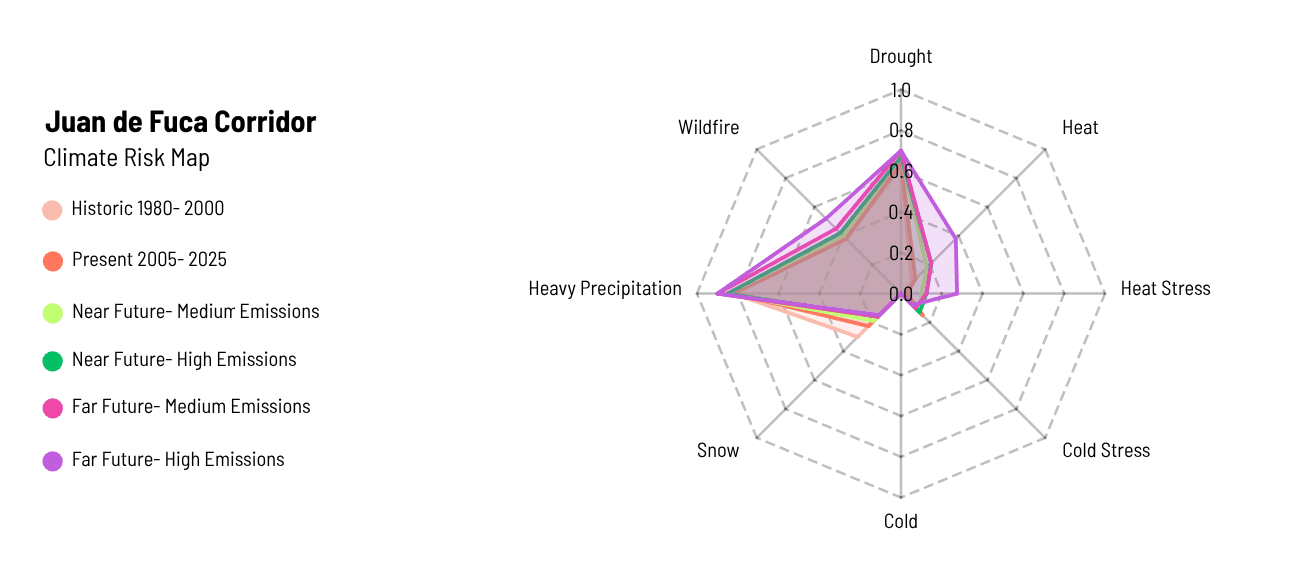
Around the world, climate is already influencing how, where and when people travel. As part of the overall Juan de Fuca Corridor strategy, Destination Canada and partners have developed a Strategic Climate Resilience Roadmap for the corridor.
Climate resilience planning
Around the world, climate is already influencing how, where and when people travel. As part of the overall Juan de Fuca Corridor strategy, Destination Canada and partners have developed a Strategic Climate Resilience Roadmap for the corridor.
Understanding the risks and the roadmap will help partners and communities:
- Think about future conditions when planning tourism projects and infrastructure. Support businesses as they adjust experiences and operations in response to changing conditions and climate related events.
- Focus investment on projects and assets that are designed to be viable and resilient over the long term.
Climate resilience planning is an ongoing piece of the corridor strategy and will continue to evolve with community input and new data. Communities, operators or investors who want to learn more about this work can contact Destination Canada for further information or support.
Understanding the risks and the roadmap will help partners and communities:
- Think about future conditions when planning tourism projects and infrastructure. Support businesses as they adjust experiences and operations in response to changing conditions and climate related events.
- Focus investment on projects and assets that are designed to be viable and resilient over the long term.
Climate resilience planning is an ongoing piece of the corridor strategy and will continue to evolve with community input and new data. Communities, operators or investors who want to learn more about this work can contact Destination Canada for further information or support.
Investment opportunity in the corridor
From Sooke to Port Renfrew and the Olympic Peninsula, communities are working together so visitors can enjoy this coast while helping to care for it. This corridor helps communities diversify their economies and protect what makes this place special. Investors have the chance to participate in a transformative destination model that balances economic growth with community benefit and environmental integrity.
Potential investment opportunities in this corridor include:
Future & sustainable mobility
- Expand hiking and biking networks, accessible trails, and inclusive wayfinding systems.
- Invest in low-emission transport, including electric ferries and integrated regional transit.
- Build visitor-friendly infrastructure such as rest areas, bike-friendly accommodations, gear rental shops, and eco-conscious visitor hubs that support active travel.
Indigenous & regenerative tourism
- Partner with First Nations to co-create authentic cultural tourism experiences
- Invest in eco-lodges, Indigenous-owned accommodations, and low-impact glamping
- Capitalize on the demand for slow travel and restorative nature experiences through spa retreats, forest bathing trails, and coastal wellness centres.
Visitor experience & tech innovation
- Launch digital platforms enabling self-guided tours, itineraries, real-time travel info.
- Develop digital tools for booking multi-day packages with hotel, transit, guides, events.
- Create visitor centres or mobile experiences that offer AR/VR storytelling, Indigenous narratives, and ecological interpretation.
Community & capacity building
- Invest in local tourism cooperatives to ensure inclusive, long-term economic benefits.
- Collaborate on training that builds tourism skills among youth and rural workers.
- Support sustainable supply networks for local food, crafts, and tourism goods, generating new markets and elevating regional brand identity.
Current investment in the corridor
Several initiatives are already underway or planned:
- Strategic alignment between the Sooke Region Tourism Association and the District of Sooke's 2030 Climate Action Plan.
- Expansion of the marina at the Prestige Oceanfront Resort in Sooke to include floatplane access.
- Community tourism planning support from Destination BC for Sooke and Port Renfrew.
- Preliminary discussions around establishing a helipad between Sooke and Port Renfrew to support electric helicopter services.
- BC Parks invested $2.1 million between 2019 and 2023 in the Juan de Fuca trail.
Investment opportunity in the corridor
From Sooke to Port Renfrew and the Olympic Peninsula, communities are working together so visitors can enjoy this coast while helping to care for it. This corridor helps communities diversify their economies and protect what makes this place special. Investors have the chance to participate in a transformative destination model that balances economic growth with community benefit and environmental integrity.
Potential investment opportunities in this corridor include:
Future & sustainable mobility
- Expand hiking and biking networks, accessible trails, and inclusive wayfinding systems.
- Invest in low-emission transport, including electric ferries and integrated regional transit.
- Build visitor-friendly infrastructure such as rest areas, bike-friendly accommodations, gear rental shops, and eco-conscious visitor hubs that support active travel.
Indigenous & regenerative tourism
- Partner with First Nations to co-create authentic cultural tourism experiences
- Invest in eco-lodges, Indigenous-owned accommodations, and low-impact glamping
- Capitalize on the demand for slow travel and restorative nature experiences through spa retreats, forest bathing trails, and coastal wellness centres.
Visitor experience & tech innovation
- Launch digital platforms enabling self-guided tours, itineraries, real-time travel info.
- Develop digital tools for booking multi-day packages with hotel, transit, guides, events.
- Create visitor centres or mobile experiences that offer AR/VR storytelling, Indigenous narratives, and ecological interpretation.
Community & capacity building
- Invest in local tourism cooperatives to ensure inclusive, long-term economic benefits.
- Collaborate on training that builds tourism skills among youth and rural workers.
- Support sustainable supply networks for local food, crafts, and tourism goods, generating new markets and elevating regional brand identity.
Current investment in the corridor
Several initiatives are already underway or planned:
- Strategic alignment between the Sooke Region Tourism Association and the District of Sooke's 2030 Climate Action Plan.
- Expansion of the marina at the Prestige Oceanfront Resort in Sooke to include floatplane access.
- Community tourism planning support from Destination BC for Sooke and Port Renfrew.
- Preliminary discussions around establishing a helipad between Sooke and Port Renfrew to support electric helicopter services.
- BC Parks invested $2.1 million between 2019 and 2023 in the Juan de Fuca trail.
Get involved
To learn more about this Corridor, including partnerships, investment opportunities, community engagement initiatives and volunteer opportunities, please contact us:
Jennifer Horsnell
Senior Director, Destination Development
horsnell.jennifer@destinationcanada.com
Gail Scott
Community Economic Development Officer
District of Sooke
250-526-0036
GScott@sooke.ca
Debbie Wardrop
Steering Committee
Olympic Peninsula Tourism Commission (OPTC)
debbiewardropllc@gmail.com
Get involved
To learn more about this Corridor, including partnerships, investment opportunities, community engagement initiatives and volunteer opportunities, please contact us:
Jennifer Horsnell
Senior Director, Destination Development
horsnell.jennifer@destinationcanada.com
Gail Scott
Community Economic Development Officer
District of Sooke
250-526-0036
GScott@sooke.ca
Debbie Wardrop
Steering Committee
Olympic Peninsula Tourism Commission (OPTC)
debbiewardropllc@gmail.com
Resources and downloads
Strategy: Juan de Fuca Tourism Corridor Strategy Summary
Insights: Access the Tourism Data Collective for national and regional insights, including market profiles, current tourism assets and capacity, and forecasting.
Investment Readiness: Find a project to invest in, or download tools to help your region attract and manage investment.
Destination Development Toolkits: Practical guides for communities building their first tourism plan.
Resources and downloads
Strategy: Juan de Fuca Tourism Corridor Strategy Summary
Insights: Access the Tourism Data Collective for national and regional insights, including market profiles, current tourism assets and capacity, and forecasting.
Investment Readiness: Find a project to invest in, or download tools to help your region attract and manage investment.
Destination Development Toolkits: Practical guides for communities building their first tourism plan.